Have you ever looked up at the sky and felt inspired to capture those fluffy, drifting clouds on paper? Cloud drawing isn’t just child’s play—it’s a powerful artistic skill that blends observation, technique, and imagination. Whether you’re a beginner or a seasoned artist, mastering cloud drawing can elevate your landscape art and deepen your connection with nature.
What Is Cloud Drawing and Why It Matters

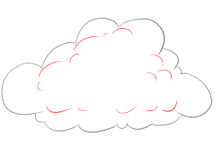
Cloud drawing is the artistic practice of rendering clouds in various forms, styles, and mediums. It goes beyond simple doodling—it involves understanding atmospheric conditions, light behavior, and the emotional tone clouds can convey in a scene. Artists use cloud drawing to enhance realism in landscapes, express mood, or explore abstract interpretations of the sky.
The Artistic Significance of Clouds
Clouds have played a symbolic and aesthetic role in art for centuries. From J.M.W. Turner’s dramatic stormscapes to the serene skies in Japanese ukiyo-e prints, clouds are more than meteorological phenomena—they’re emotional anchors. In cloud drawing, artists learn to translate fleeting moments of light and shadow into lasting visual narratives.
- Clouds set the mood of a painting—soft cumulus for calm, stormy nimbus for tension.
- They guide the viewer’s eye through a composition.
- They reflect cultural symbolism—freedom, transience, dreams.
Scientific Basis Behind Cloud Forms
To draw realistic clouds, artists benefit from understanding basic meteorology. Clouds form due to temperature, humidity, and air pressure changes. The International Cloud Atlas, maintained by the World Meteorological Organization (cloudatlas.wmo.int), classifies ten main cloud genera, each with distinct visual characteristics. Knowing these helps in accurate cloud drawing.
“Understanding cloud types isn’t just for scientists—it’s essential for artists who want authenticity in their sky scenes.” — Dr. Gavin Pretor-Pinney, founder of the Cloud Appreciation Society
Essential Tools for Cloud Drawing
While cloud drawing can be done with a simple pencil, having the right tools enhances precision and expressiveness. The choice of medium affects texture, contrast, and blending capability—all crucial for capturing the ethereal nature of clouds.
Drawing Materials and Mediums
Different mediums offer unique advantages for cloud drawing:
- Pencil and Charcoal: Ideal for tonal gradation and soft edges. Graphite pencils (HB to 6B) allow for subtle shading, while charcoal adds dramatic contrast.
- Ink and Wash: Pen and ink with watercolor wash can create crisp cloud outlines with soft atmospheric depth.
- Digital Tools: Software like Adobe Photoshop or Procreate offers layers, blending modes, and undo functions, making cloud drawing more flexible and experimental.
For beginners, starting with a basic sketchbook and a set of graphite pencils is recommended. As skills grow, artists can experiment with blending stumps, kneaded erasers, and airbrush tools for smoother gradients.
Choosing the Right Paper
Paper texture and weight significantly impact cloud drawing outcomes:
- Smooth Bristol Board: Best for fine details and clean lines.
- Textured Watercolor Paper: Enhances soft blending, ideal for cloud edges that fade into the sky.
- Toned Paper: Mid-gray or blue paper allows artists to work both upward (adding white highlights) and downward (darkening shadows), mimicking how light interacts with clouds.
Heavier paper (140 lb or more) prevents buckling, especially when using wet media in combination with dry techniques.
Understanding Cloud Types for Accurate Drawing
Not all clouds look the same. Accurate cloud drawing requires familiarity with common cloud formations. Each type has a unique structure, altitude, and visual texture that must be reflected in your artwork.
Cumulus Clouds: The Fluffy Giants
Cumulus clouds are the classic ‘cotton ball’ clouds, often seen on sunny days. They have flat bases and puffy, rounded tops. In cloud drawing, focus on:
- Sharp contrast between sunlit tops and shaded undersides.
- Soft, irregular edges—avoid hard lines.
- Spacing between clouds to suggest depth and airflow.
Use a kneaded eraser to lift graphite from paper, creating highlights on the upper surfaces. This technique mimics the way sunlight reflects off dense water droplets.
Stratus Clouds: The Blanket Skies
Stratus clouds form uniform, gray layers that cover the sky like a blanket. They often bring overcast conditions or light drizzle. In cloud drawing, these require:
- Subtle tonal variations rather than sharp contrasts.
- Horizontal blending to suggest vast, flat expanses.
- Avoiding texture—stratus clouds lack defined edges.
Use a blending stump or soft brush to smooth gradients. A light touch with a 2B pencil can create the hazy, diffused look typical of stratus-dominated skies.
Cirrus and Nimbus Clouds: High and Stormy
Cirrus clouds are high-altitude, wispy formations made of ice crystals. They appear feathery and delicate. In contrast, nimbus clouds (like cumulonimbus) are dense, towering, and associated with storms.
- Cirrus: Draw with fine, flowing lines. Use a sharp H pencil for precision.
- Nimbus: Emphasize vertical development and dark underbellies. Use heavy shading and dramatic contrasts.
For cumulonimbus, layer dark values at the base and gradually lighten toward the top. This creates the illusion of immense height and internal turbulence.
Step-by-Step Guide to Cloud Drawing
Mastering cloud drawing involves a structured approach. Follow these steps to create realistic and expressive cloudscapes.
Step 1: Observation and Sketching
Before drawing, spend time observing real clouds. Note their shapes, edges, and how light interacts with them. Take photos or make quick thumbnail sketches. This practice trains your eye to see beyond generic ‘fluffy balls’.
- Look for patterns: Are clouds clustering? Moving in a direction?
- Identify light sources: Where is the sun? How does it affect shadows?
- Sketch loosely with light lines to map cloud positions.
Step 2: Building Form with Value
Clouds are three-dimensional. Use value (light and dark) to create volume:
- Start with mid-tones for the main body.
- Add darker values beneath and between clouds to suggest depth.
- Leave or erase highlights on top surfaces to show illumination.
Work from general to specific—block in large shapes before refining edges.
Step 3: Refining Edges and Atmosphere
Cloud edges vary: some are sharp, others diffuse. Use blending tools to soften edges where clouds merge with the sky. For distant clouds, reduce contrast and detail to create atmospheric perspective.
- Soft edges = closer to the horizon or farther away.
- Hard edges = closer to the viewer or under strong sunlight.
- Use a tortillon or tissue paper for smooth transitions.
Advanced Cloud Drawing Techniques
Once you’ve mastered the basics, explore advanced methods to add drama and realism to your cloud drawing.
Layering and Glazing
In both traditional and digital art, layering builds depth. In graphite drawing, apply multiple light layers instead of pressing hard. This prevents shiny patches and allows for gradual darkening.
- Use a light hand and build values slowly.
- For digital cloud drawing, use low-opacity brushes and layer modes like ‘Multiply’ or ‘Overlay’.
- Glazing with watercolor over pencil sketches can add atmospheric color.
Negative Space and Erasing as a Tool
Erasing isn’t just for corrections—it’s a creative technique. In cloud drawing, use a kneaded eraser to ‘draw’ light areas by removing graphite. This mimics the way clouds reflect light against a darker sky.
- Lift highlights on cloud tops.
- Create misty effects by gently dabbing the eraser.
- Use a precision eraser for fine details like cloud fissures.
Dynamic Composition with Clouds
Clouds can lead the viewer’s eye, frame subjects, or create balance. In landscape cloud drawing, consider:
- Using cloud shapes to form a natural frame around a mountain or tree.
- Aligning cloud flow with wind direction for realism.
- Creating contrast—bright clouds against a dark sky, or vice versa.
Study the rule of thirds and golden ratio to place key cloud elements strategically.
Digital Cloud Drawing: Tools and Tips
Digital platforms have revolutionized cloud drawing, offering unmatched flexibility and control.
Software for Cloud Drawing
Popular digital art programs include:
- Adobe Photoshop: Industry standard with powerful brush engines and layer effects.
- Procreate (iPad): Intuitive interface, ideal for sketching and painting clouds on the go.
- Krita: Free and open-source, with excellent brush customization.
Each supports pressure-sensitive styluses, allowing for natural-looking strokes that mimic real media.
Creating Realistic Cloud Textures Digitally
To simulate the soft, billowy nature of clouds:
- Use soft round brushes with low opacity and flow.
- Enable ‘transfer’ and ‘texture’ settings for varied edge effects.
- Sample sky colors and blend gently to avoid flatness.
Layer multiple cloud passes—background, mid, and foreground—for depth. Adjust layer opacity to create distance.
Time-Lapse and Animation in Cloud Drawing
Digital tools allow artists to record their cloud drawing process. Time-lapse videos are great for tutorials or social media. Some artists even animate clouds, showing them drifting or transforming—ideal for digital storytelling or game design.
- Use animation software like Adobe After Effects or FlipaClip.
- Create frame-by-frame transitions for smooth motion.
- Export in MP4 or GIF for sharing.
Cloud Drawing in Education and Therapy
Cloud drawing isn’t just for professional artists. It has valuable applications in education and mental wellness.
Teaching Observation and Patience
In schools, cloud drawing helps students develop visual literacy. It encourages them to:
- Observe natural phenomena closely.
- Practice patience and attention to detail.
- Connect art with science (meteorology, physics of light).
Teachers can integrate cloud drawing into interdisciplinary lessons, combining art, geography, and environmental studies.
Cloud Drawing as Mindfulness Practice
Focusing on the slow, flowing shapes of clouds can be meditative. Art therapists use cloud drawing to help clients:
- Reduce anxiety by focusing on the present moment.
- Express emotions indirectly—’What does this cloud remind you of?’
- Encourage imaginative thinking and self-reflection.
The repetitive motion of shading and blending can induce a calm, flow-like state.
Inspiration and Famous Cloud Drawings in Art History
Throughout history, artists have used cloud drawing to convey emotion, realism, and transcendence.
John Constable and the Science of Skies
19th-century British painter John Constable was obsessed with skies. He believed ‘the sky is the chief organ of sentiment’ in a landscape. His cloud studies, done outdoors, combined artistic skill with meteorological accuracy. Today, his sketches are studied for their precise rendering of cloud dynamics.
- He labeled each study with date, time, and wind direction.
- Used white chalk on blue paper to mimic daylight.
- Inspired modern cloud drawing with his empirical approach.
Turner’s Dramatic Cloudscapes
J.M.W. Turner pushed cloud drawing into the realm of emotional expression. His paintings feature turbulent skies that dominate the composition, often overshadowing human figures. In works like ‘Snow Storm: Steam-Boat off a Harbour’s Mouth’, clouds become forces of nature.
- Used rapid brushwork and color contrasts.
- Blurred boundaries between sea and sky.
- Influenced Impressionists and modern abstract artists.
Contemporary Artists and Cloud Drawing
Modern artists continue to explore clouds in innovative ways:
- Alexandra Gallagher: Combines cloud motifs with surreal self-portraits.
- Yayoi Kusama: Uses polka-dot patterns to transform clouds into infinite spaces.
- Digital illustrators: Create hyper-realistic cloudscapes for concept art and virtual environments.
Online communities like DeviantArt and ArtStation showcase thousands of cloud drawing examples, from realistic to fantastical.
What is the easiest way to start cloud drawing?
The easiest way to start cloud drawing is with a pencil and sketchbook. Begin by observing real clouds and making simple line drawings. Focus on shape and basic light/shadow. Use online references or apps like SkyView to identify cloud types. Practice regularly, and gradually introduce shading techniques.
Can I use watercolor for cloud drawing?
Yes, watercolor is excellent for cloud drawing. Use wet-on-wet techniques to create soft, diffused edges. Start with a light wash for the sky, then lift color with a clean brush or sponge to form clouds. Add subtle gray tones for depth. Combine with pencil for structure.
How do I make my cloud drawings look more realistic?
To make cloud drawings realistic, study real clouds and understand their structure. Use proper value contrast—bright tops, dark undersides. Avoid hard outlines; blend edges softly. Consider atmospheric perspective: distant clouds are lighter and less detailed. Practice with reference photos and learn basic cloud meteorology.
What paper is best for cloud drawing?
For traditional cloud drawing, use smooth Bristol board for detail or textured watercolor paper for soft blending. Toned paper (gray or blue) is great for working in both lights and darks. For digital, any tablet with a pressure-sensitive stylus works well. Choose paper weight of 90 lb or higher to prevent warping.
Are there apps for cloud drawing practice?
Yes, several apps support cloud drawing practice. Procreate, Adobe Fresco, and Autodesk Sketchbook offer powerful tools for sketching and painting clouds. Some apps, like CloudSpotter, combine identification with drawing challenges. Time-lapse features help track progress and share creations online.
Cloud drawing is far more than a simple sketching exercise—it’s a bridge between art and science, observation and imagination. From the soft cumulus of a summer day to the brooding cumulonimbus of a storm, mastering cloud drawing enhances your artistic expression and deepens your appreciation of the sky. Whether using pencil, paint, or pixels, the techniques covered—from understanding cloud types to advanced digital layering—equip you to create compelling, lifelike skies. By studying the masters, practicing mindfulness, and experimenting with tools, you can turn every blank page into a dynamic, breathing atmosphere. So next time you look up, don’t just see clouds—see a canvas waiting to be drawn.
Further Reading:
